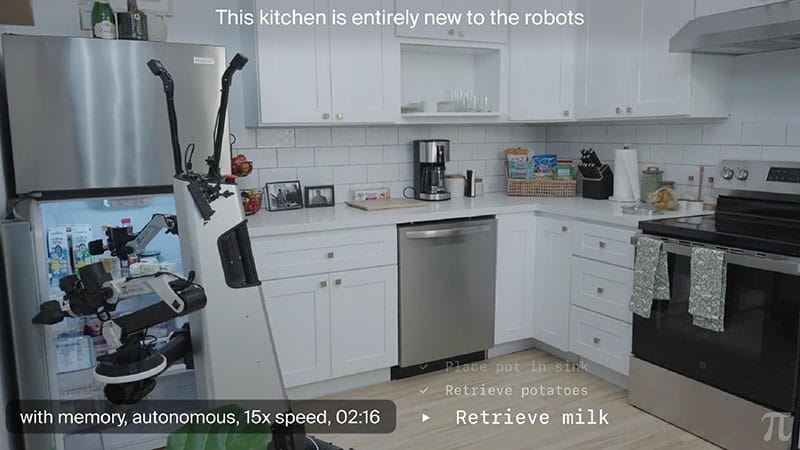
🤖 Grip Chips Unbroken

Good Morning, Roboticists!
The physical world is starting to move the way software once did.
Robotic Hand Grips Chips Unbroken
TL;DR: Engineers at the University of Texas at Austin developed FORTE, a robotic hand that combines soft robotics with tactile air-pressure sensors inspired by fish fins. The system can grip delicate objects like raspberries or potato chips without crushing them, achieving a 91.9% success rate and detecting slip events with perfect precision, enabling robots to handle fragile items in food processing, healthcare, and manufacturing.
Hair-Thin Fiber Moves Like Muscle
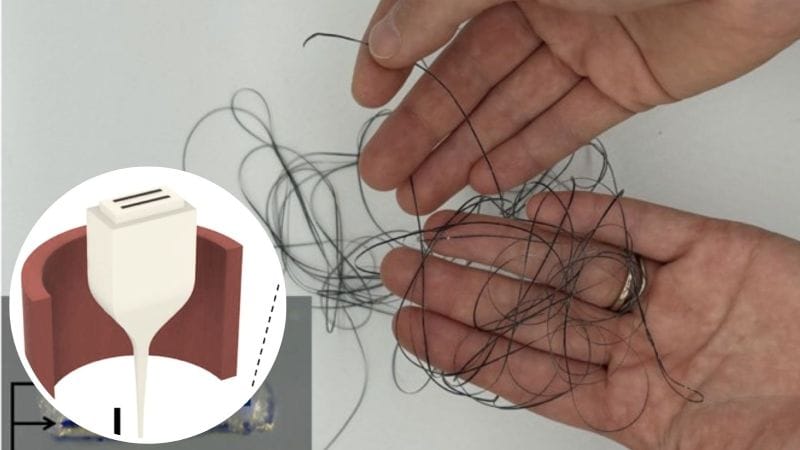
TL;DR: Researchers at Tohoku University created a hair-thin actuator fiber that bends, contracts, and twists when electricity is applied. Produced using a thermal-drawing process similar to optical fiber manufacturing, the soft polyurethane “yarn” can be woven into fabrics or flexible structures, enabling soft robots, wearable devices, and medical systems that move gently like artificial muscles.
Robots Trained in Virtual Worlds
TL;DR: The Allen Institute for AI introduced MolmoBot, an open robotic manipulation system trained entirely on simulated data rather than costly human demonstrations. Using procedurally generated environments in MolmoSpaces, the team produced 1.8 million training trajectories and showed robots transferring skills directly to real hardware, reaching 79.2% success in real-world tasks while reducing dependence on expensive physical data collection.
Robot Fear Linked to Exposure
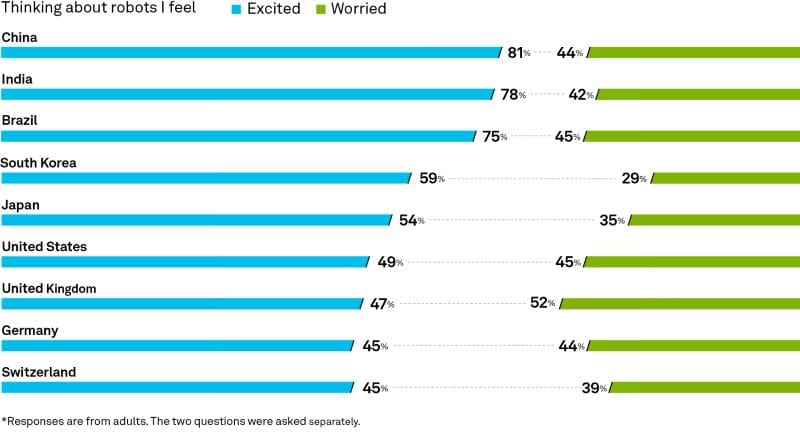
TL;DR: A global survey by Hexagon of 18,000 people across nine countries found that public anxiety about robots is highest where people rarely encounter them. In countries like China and South Korea, frequent exposure correlates with strong enthusiasm, while in the UK—where only 30% have seen robots—worry dominates, with security risks now surpassing job loss as the top concern.
Delivery Robots Leave the Sidewalk
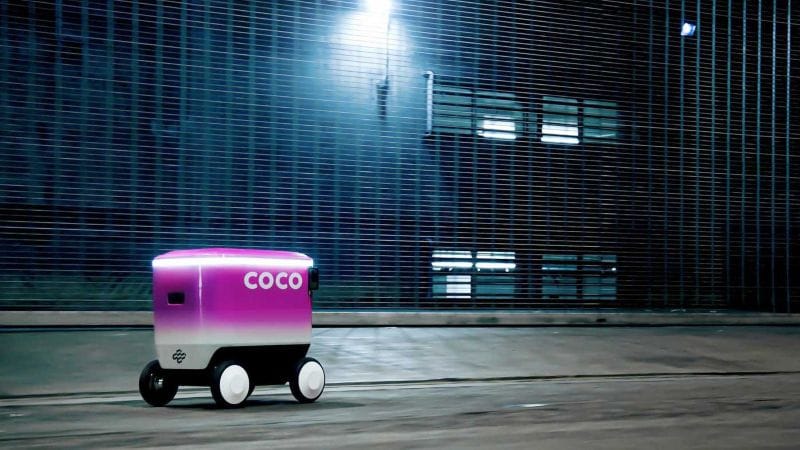
TL;DR: Coco Robotics introduced its Coco 2 delivery robot, designed to operate on streets and bike lanes at speeds up to 13 mph without remote drivers. The system uses Niantic Spatial’s visual positioning technology—built from over 30 billion mapped images originally collected through Pokémon GO—to navigate dense cities more precisely, helping robots locate entrances, curbs, and drop-off points where GPS alone struggles.
AI Turns Images Into Robot Plans
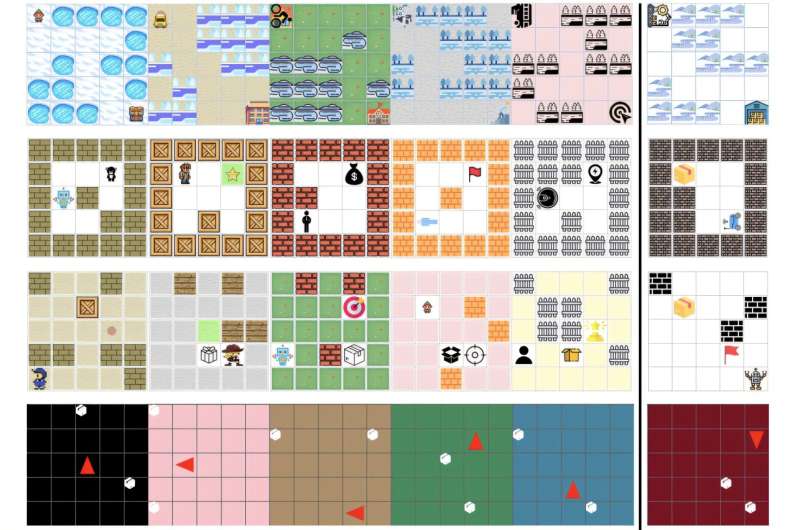
TL;DR: MIT researchers developed a hybrid planning system that converts images into robot action plans by combining vision-language models with traditional planning software. One model interprets the visual scene and simulates possible actions, while another converts that reasoning into formal planning code. The system achieved around 70% success, roughly doubling the performance of existing methods in long-horizon visual tasks.
Two-Armed Robots Stabilize Space Repairs
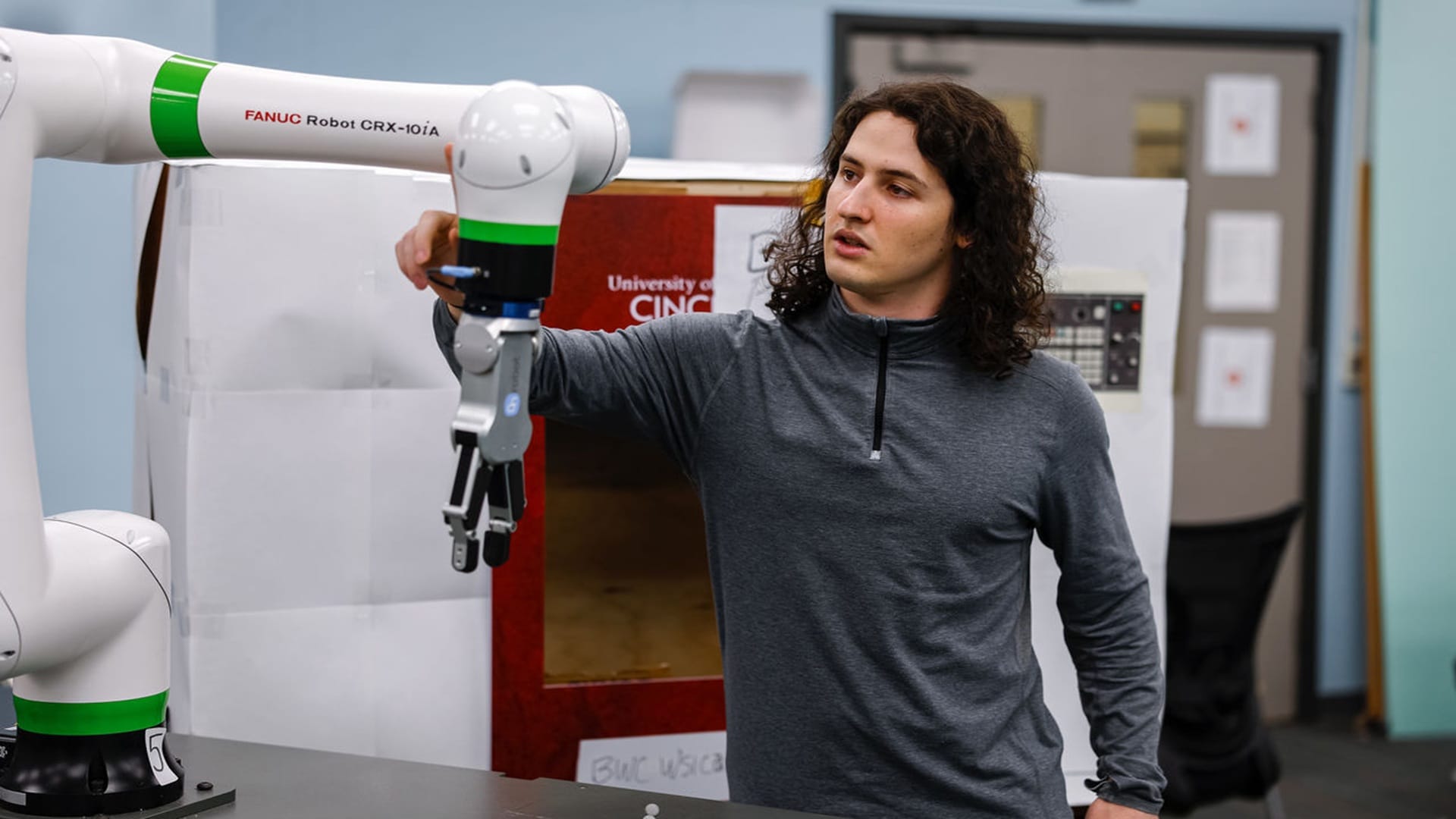
TL;DR: Engineers at the University of Cincinnati developed a “Dual-Arm Zero Momentum” system that helps space robots repair satellites without causing them to spin in microgravity. While one arm performs the repair, the second arm moves in the opposite direction to counterbalance forces, keeping both the robot and satellite stable during delicate maintenance operations in orbit.
Robots Learn to Peel Apples
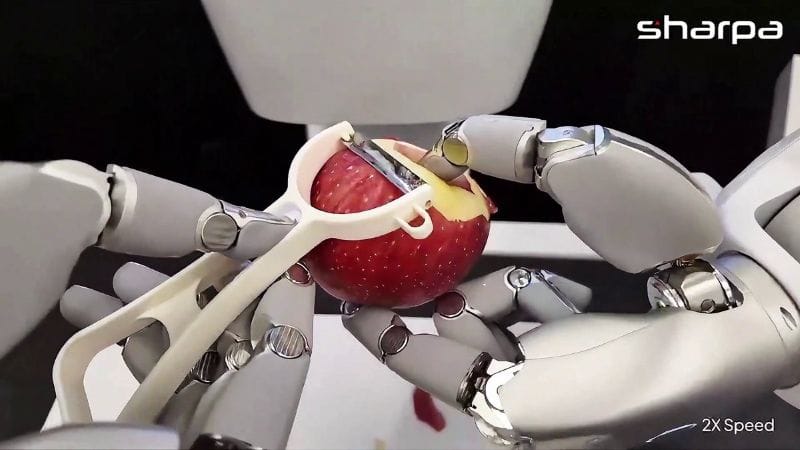
TL;DR: Sharpa Robotics demonstrated a humanoid robot autonomously peeling an apple using a new AI architecture called MoDE-VLA. The system combines dual-hand coordination with tactile sensing and a shared-autonomy training method called IMCopilot to collect manipulation data. In tests across four complex tasks, the approach doubled baseline performance and achieved a 30% success rate on the challenging apple-peeling benchmark.
READ MORE
Let the Future Come to Your Inbox
Stay ahead without drowning in information. We turn the most important signals across AI, tech, marketing, and future products into 5-minute reads you can actually finish.
- AI Secret uncovers what really matters in AI
- Bay Area Letters decodes tech and business shifts from Silicon Valley
- Robotics Herald tracks how robots move from labs into daily life
- Marketing Secret breaks down real growth and go-to-market playbooks
- The Hardwire explores hardware, consumer tech, and what’s coming next
TOGETHER WITH US
AI Secret Media Group is the world’s #1 AI & Tech Newsletter Group, reaching over 2 million leaders across the global innovation ecosystem, from OpenAI, Anthropic, Google, and Microsoft to top AI labs, VCs, and fast-growing startups.
We've helped promote over 500 Tech Brands. Will yours be the next?
Email our co-founder Mark directly at mark@aisecret.us if the button fails.