🤖 New Sensory Standard

Good Morning, Roboticists!
We’re entering a phase where robotics stops being a single narrative about automation and starts branching into entirely new survival, perception, and social architectures.
NEW TECH
Micro Robotics Just Got a New Sensory Standard

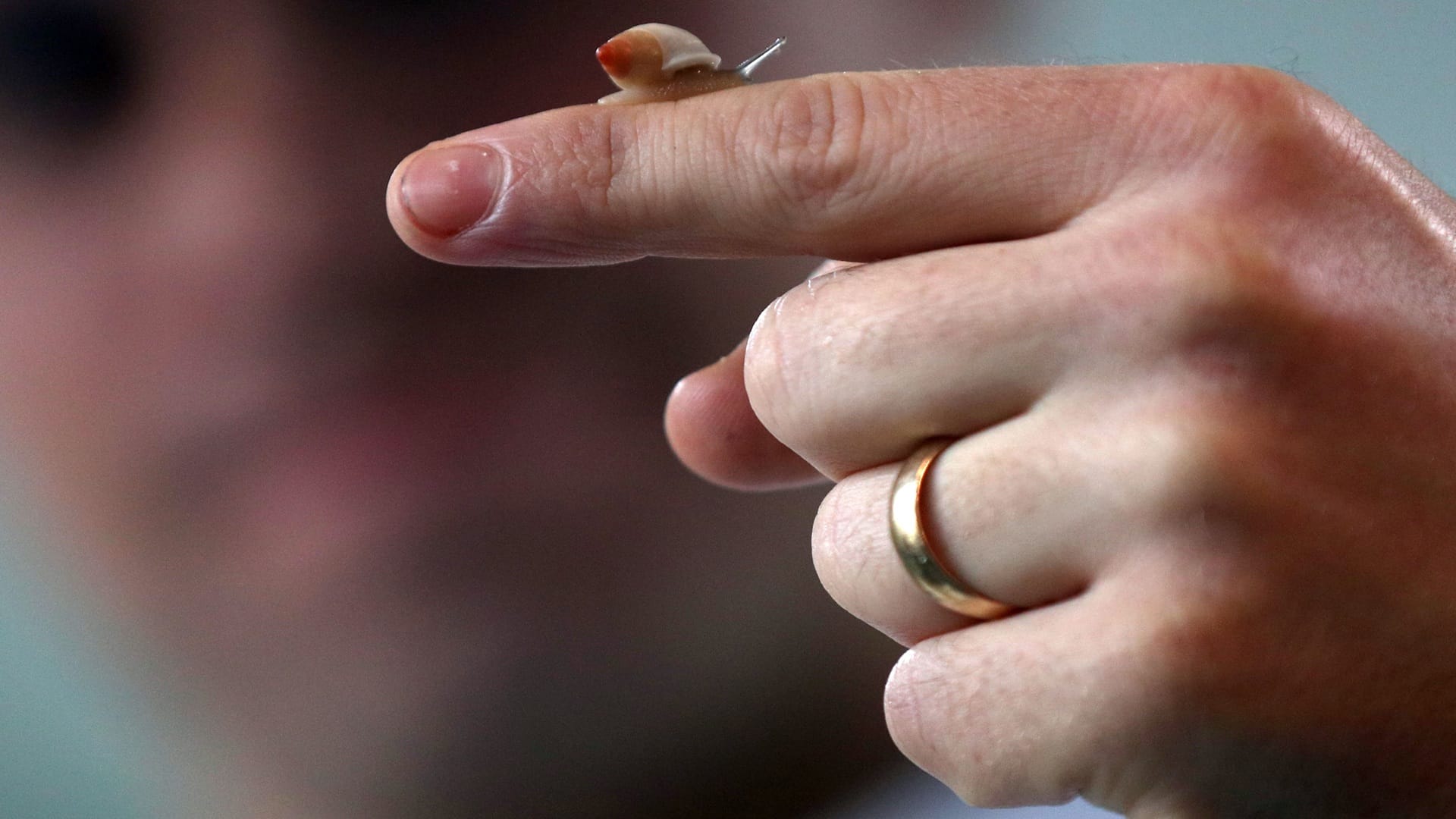
👀 What’s happening: Scientists at the Chinese Academy of Sciences built a 1.5 millimeter artificial compound eye with bionic smell, inspired by fruit flies, and published it in Nature Communications. Using femtosecond laser two photon polymerization, they packed 1,027 visual units into a curved structure delivering 180 degree vision, then added an inkjet printed chemical array that changes color when detecting hazardous gases. The integrated “bio-CE system” was mounted on a micro robot that successfully detected moving objects and avoided obstacles
🌍 How this hits reality: Traditional micro robots stack separate cameras and gas sensors, adding weight, wiring, and power draw. On palm sized machines, even a few grams reduce runtime and mobility. Integrating vision and chemical sensing into a single 1.5 millimeter module cuts payload and simplifies system architecture. In collapsed buildings, industrial tunnels, or toxic environments, a 180 degree field of view plus gas detection in one unit expands what small autonomous systems can safely attempt.
🤖 Key takeaway: This is hardware level multi modal fusion at extreme scale. If image resolution and chemical response speed improve, micro robotics design will shift toward integrated sensing blocks, enabling smaller, cheaper, and more autonomous machines in hazardous spaces.
NEW TECH
Robots That Refuse to Fail
👀 What’s happening: Researchers at EPFL built a modular origami robot called Mori3 that keeps functioning even when one module completely loses power, sensing, and communication. Instead of isolating resources, every unit shares energy, data, and perception locally. In lab tests, a “dead” core module was effectively revived by its neighbors.
🌍 How this hits reality: Traditional multi agent robots become statistically more fragile as you add modules. More parts mean more failure points. EPFL showed that partial redundancy does not solve this. Only full resource sharing reversed the reliability curve. A four module system continued locomotion after total shutdown of one unit. That has implications for space robotics, disaster response, military systems, and autonomous infrastructure where maintenance windows are limited or impossible.
🤖 Key takeaway: If this architecture scales to swarms, reliability stops being a tradeoff against complexity. Distributed robots could operate in hostile environments with graceful ”degradation“ instead of collapse, reshaping how defense, energy, and off world automation systems are engineered.
COMPANION
Adult Robotics Moves Into Mainstream Service Work
👀 What’s happening: Realbotix, born from the RealDoll adult companion business, is repositioning its humanoid robots for hotels, casinos, retail, and healthcare. The same lifelike skin, modular interchangeable faces, and camera embedded robotic eyes are now paired with large language models to run front desks and hold autonomous conversations in public spaces.
🌍 How this hits reality: Realbotix's years of work on silicone skin, facial mechanics, and expressive robotic eyes created embodiment most service robotics startups could never justify funding. That history now becomes a structural edge, which means its service robots can simulate warmth, flirtation, or even “adult-adjacent” interaction layers that traditional concierge bots were never architected to support. This asymmetry is hard to replicate because it was financed by a different market entirely.
🤖 Key takeaway: This is not a clean break. It is a migration. Adult tech incubated believable humanoid form factors under high tolerance conditions. AI gave it a new narrative and new buyers. The first scalable social robots may emerge from adult industries that were never considered mainstream.
DAILY TL;DR
- PickNik and Motiv will develop software and control systems for NASA’s FFR mission to advance in-space robotic manipulation under the ISAM initiative.
- Beijing rehearsed three-foot humanoid robots for a lion dance ahead of Lunar New Year festivities.
- Mint will invest HK$10 million in a physical AI joint venture with Rice Robotics in Hong Kong and Asia, sending its shares up nearly 97% after hours.
- Fincantieri is partnering with Generative Bionics to build a humanoid welding robot, with testing set for late 2026.
- Ambi Robotics launched AI Skill Suite powered by AmbiOS, licensing production-proven physical AI skills to partners across robotic platforms.
READ MORE
Let the Future Come to Your Inbox
Stay ahead without drowning in information. We turn the most important signals across AI, tech, marketing, and future products into 5-minute reads you can actually finish.
- AI Secret uncovers what really matters in AI
- Bay Area Letters decodes tech and business shifts from Silicon Valley
- Robotics Herald tracks how robots move from labs into daily life
- Marketing Secret breaks down real growth and go-to-market playbooks
- The Hardwire explores hardware, consumer tech, and what’s coming next
- Oncely helps you discover the next wave of AI products and launches
TOGETHER WITH US
AI Secret Media Group is the world’s #1 AI & Tech Newsletter Group, reaching over 2 million leaders across the global innovation ecosystem, from OpenAI, Anthropic, Google, and Microsoft to top AI labs, VCs, and fast-growing startups.
We've helped promote over 500 Tech Brands. Will yours be the next?
Email our co-founder Mark directly at mark@aisecret.us if the button fails.