🤖 Run! Run! Run!

Good Morning, Roboticists!
From bubble-sized machines navigating tumors to joints that self-correct faster than human reflexes, intelligence is leaking out of models and into motion.
SPEED
A Humanoid Robot Just Outran People in a Lab
👀 What’s happening: Researchers at Zhejiang University in China built a full-scale humanoid called Bolt that runs 10 meters per second. Public demos show it outrunning a human on a treadmill despite shorter strides. Named after Usain Bolt, it brings biped robots into the same speed class as leading quadrupeds, signaling a jump in biped control.
🌍 How this hits reality: Hitting 10 meters per second is less about racing and more about system stress. Actuators balance control and power delivery all operate near limits. That capability matters for robots moving across large sites fast, responding to emergencies, or navigating unstable terrain where slow biped motion fails and wheels cannot go.
🤖 Key takeaway: The obvious next step is payload. If this level of speed holds while carrying tools or heavy objects, humanoids shift from controlled demos to practical high mobility labor systems.
THERAPY
Bubble Robots Rewrite the Rules of Targeted Therapy
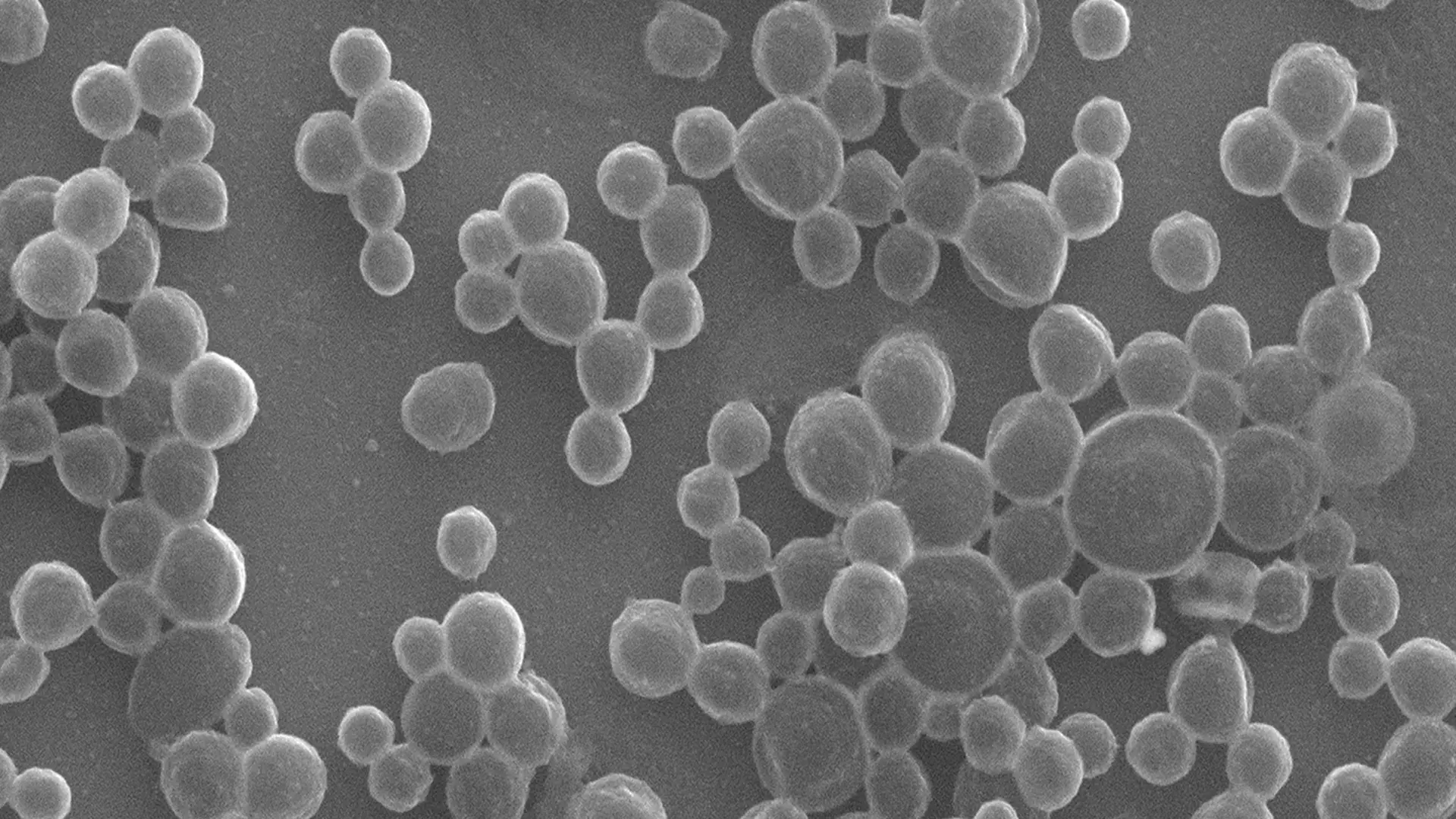
👀 What’s happening: Researchers at Caltech and University of Southern California built enzyme powered microbubble robots that move toward tumors, carry cancer drugs, and burst on command. Instead of complex micromachines with shells, motors, or controllers, the robot is just a protein shelled bubble. Ultrasound makes them cheaply. Enzymes give them motion, sensing, and targeting inside living tissue.
🌍 How this hits reality: Most microrobot drug systems fail on manufacturing, control, or cost, depending on 3D printing, clean rooms, and tight control loops. This one dodges all three. Microbubbles are already used clinically and produced by the thousands. Tumor targeting relies on chemical gradients already present in cancer tissue. In mice, tumor weight dropped about 60 percent in 21 days. Precision delivery shifts from lab curiosity to scalable medical workflow.
🤖 Key takeaway: This reframes targeted drug delivery as a scale problem, not just a robotics problem. If validated clinically, cancer therapy may shift toward controllable release platforms rather than new molecules. The barrier moves from invention to approval, and microrobotics stops being an exotic illusion.
NEW TECH
Robots Are Starting to Outsource Intelligence to Their Joints
👀 What’s happening: Engineers at Harvard University have built a knee inspired robotic joint using optimized rolling contact surfaces instead of simple circular pivots. The joint geometry is tailored to specific force paths, letting the mechanism self correct motion. Tests show 99 percent misalignment correction and much stronger output with the same motors.
🌍 How this hits reality: Most robots today burn energy and compute compensating for mechanical slop. This flips that balance. A knee like joint handled alignment mechanically, while a two finger gripper using the same method held over three times the load with identical actuator input. That reduces motor size, control complexity, power draw, and tuning overhead across humanoids, grippers, and exoskeletons.
🤖 Key takeaway: If this pattern scales, robotics shifts from smarter control stacks to smarter mechanics. Hardware starts carrying intent. That lowers cost floors, improves reliability, and quietly accelerates deployment across industrial and embodied AI systems.
QUICK HITS
- Overland AI raised $100 million to scale the deployment of its autonomous ground robots across U.S. military units.
- Northern Illinois University is recruiting volunteers for the FIRST Illinois robotics championship in March.
- LimX raised about $200 million to advance humanoid robot brains and embodied intelligence research.
- A European team has demonstrated autonomous multi-robot systems to explore lunar lava tubes as potential sites for future Moon settlements.
- Starbucks is turning to robots and AI to cut friction in stores and revive customer growth.
READ MORE
Let the Future Come to Your Inbox
Stay ahead without drowning in information. We turn the most important signals across AI, tech, marketing, and future products into 5-minute reads you can actually finish.
- AI Secret uncovers what really matters in AI
- Bay Area Letters decodes tech and business shifts from Silicon Valley
- Robotics Herald tracks how robots move from labs into daily life
- Marketing Secret breaks down real growth and go-to-market playbooks
- The Hardwire explores hardware, consumer tech, and what’s coming next
- Oncely helps you discover the next wave of AI products and launches
TOGETHER WITH US
AI Secret Media Group is the world’s #1 AI & Tech Newsletter Group, reaching over 2 million leaders across the global innovation ecosystem, from OpenAI, Anthropic, Google, and Microsoft to top AI labs, VCs, and fast-growing startups.
We've helped promote over 500 Tech Brands. Will yours be the next?
Email our co-founder Mark directly at mark@aisecret.us if the button fails.