🤖 Touching Satellites

Good Morning, Roboticists!
For decades, machines watched the world from a distance. Now they are reaching into it.
SPACE
AI Robotic Arms Move Closer to Touching Satellites
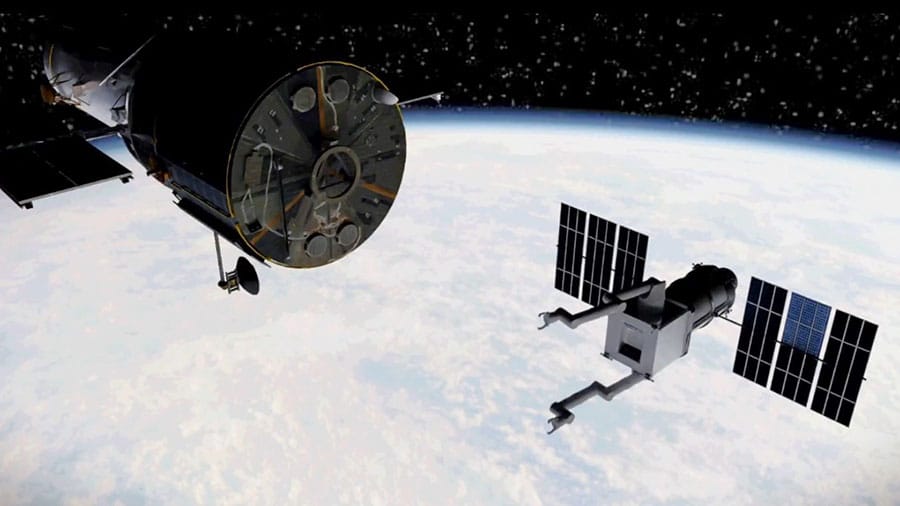
👀 What’s happening: Orbital Robotics is pitching AI driven robotic arms designed to safely grab and manipulate objects in orbit. Founded by former Blue Origin engineers, the team is testing a seven degree of freedom arm and flight software for orbital rendezvous missions planned across 2026 and 2027.
🌍 How this hits reality: Orbital interaction has been a bottleneck in space operations. Every arm movement pushes a spacecraft off course, forcing constant compensation. AI based prediction and control is meant to solve that. If it works, refueling, repairing, and extending satellite life shifts from bespoke missions to repeatable operations, protecting assets worth tens of billions and easing debris growth in crowded orbits.
🤖 Key takeaway: If autonomous capture becomes reliable, space hardware stops being disposable. Satellites turn into serviceable systems, defense and commercial operators gain leverage, and orbital robotics quietly becomes a foundational layer for the next phase of space infrastructure.
LIFE
Robots Move from Factory Floors into Human Fertility Labs
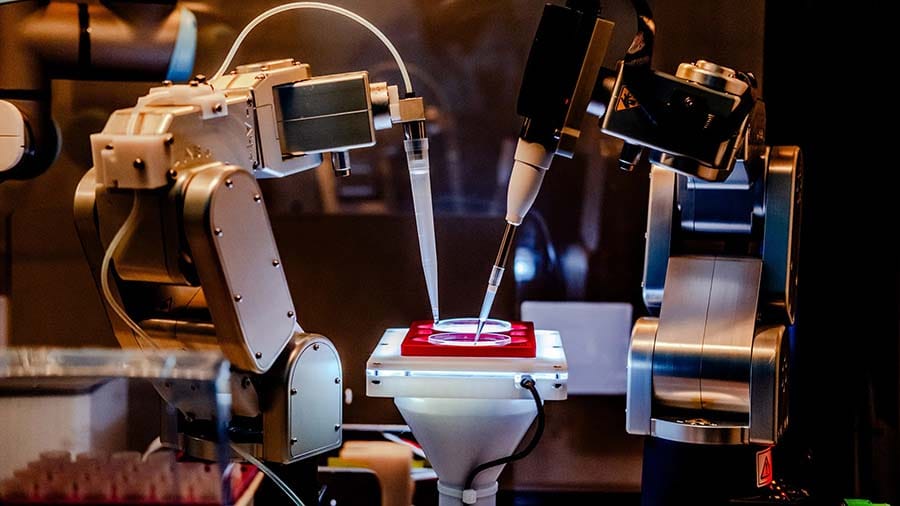
👀 What’s happening: A New York startup called Conceivable Life Sciences has built an AI driven robotic lab that can perform nearly every step of IVF outside the human body. Its AURA system has already helped produce 19 babies, using robotic arms, computer vision, and micro scale automation to handle eggs, sperm, fertilization, and freezing with machine level consistency.
🌍 How this hits reality: IVF today is artisanal, labor constrained, and expensive. Success rates hover around 37 percent in the US, while a single cycle can cost up to $30,000 and require weeks of hormone injections. Robotics might really change the bottleneck. Machines do not tire, shake, or improvise. A single automated lab could scale output by orders of magnitude, while generating precise data humans cannot capture or repeat.
🤖 Key takeaway: This is not about better bedside manner. It is about turning embryology into an industrial process. If automation proves meaningfully superior, fertility care shifts from scarce expertise to scalable systems, and one of medicine’s most human domains quietly becomes an engineering problem.
NEW TECH
Robots Finally Learn to Make Faces Respond
👀 What’s happening: Engineers at Columbia University trained a humanoid robot to lip sync speech and singing motion by watching itself and humans, not by following preset rules. Using a flexible face with 26 motors, the system learned mouth motion from mirrors and online videos. The results were published in Science Robotics.
🌍 How this hits reality: Humanoid robotics has obsessed over walking and grasping while ignoring faces. This work targets the real bottleneck. Humans track lips and facial cues for meaning and trust. Without that, robots fail in classrooms, clinics, service desks, and care settings. A face that responds correctly changes acceptance more than another degree of arm precision.
🤖 Key takeaway: Once robots can learn facial expression the same way they learn movement, interaction stops feeling scripted. If this scales, the gap between machines that perform tasks and machines that feel present may close sooner than expected.
QUICK HITS
- New York University researchers developed fluid-based gears that replace physical teeth with liquid flow, enabling more durable and flexible motion control for robots.
- Skild AI reached a valuation above $14 billion after a new funding round, centered on a general-purpose robot brain running on standard GPUs.
- HD Hyundai Robotics has hired banks for a South Korea IPO as it expands from industrial robots toward AI-driven humanoid robotics.
- Locus Robotics and Radial hit 25 million picks at one site, validating scalable fulfillment with AI AMRs under a RaaS model.
- Simbe introduced Tally 4.0, adding longer runtime and NVIDIA-powered edge AI to enhance real-time shelf data in physical retail.
READ MORE
Let the Future Come to Your Inbox
Stay ahead without drowning in information. We turn the most important signals across AI, tech, marketing, and future products into 5-minute reads you can actually finish.
- AI Secret uncovers what really matters in AI
- Bay Area Letters decodes tech and business shifts from Silicon Valley
- Robotics Herald tracks how robots move from labs into daily life
- Marketing Secret breaks down real growth and go-to-market playbooks
- The Hardwire explores hardware, consumer tech, and what’s coming next
- Oncely helps you discover the next wave of AI products and launches
TOGETHER WITH US
AI Secret Media Group is the world’s #1 AI & Tech Newsletter Group, reaching over 2 million leaders across the global innovation ecosystem, from OpenAI, Anthropic, Google, and Microsoft to top AI labs, VCs, and fast-growing startups.
We've helped promote over 500 Tech Brands. Will yours be the next?
Email our co-founder Mark directly at mark@aisecret.us if the button fails.